

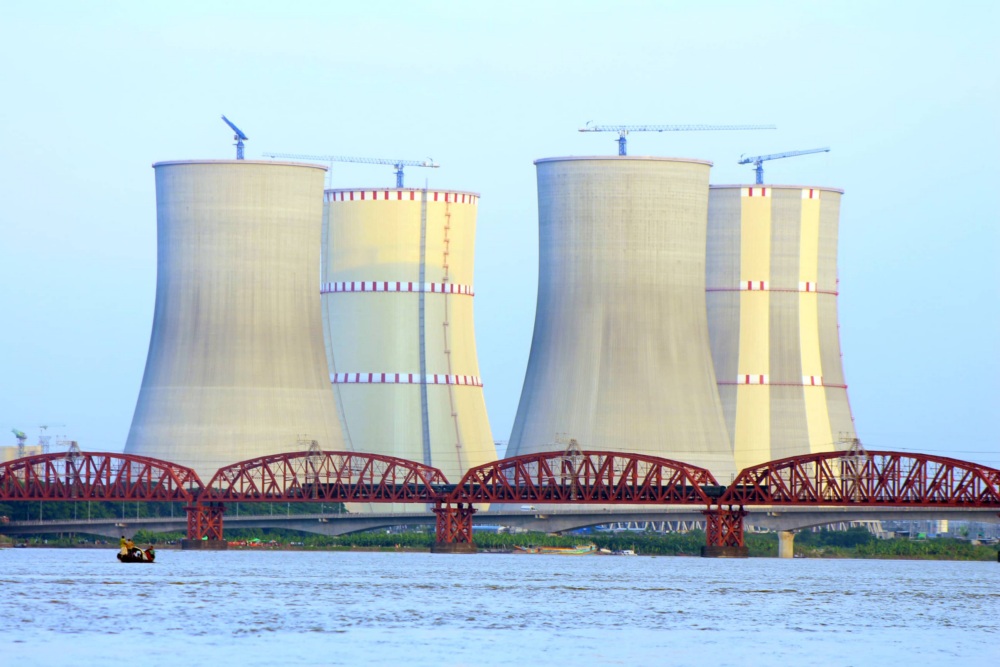
Russia announced nuclear energy initiatives with at least six African countries at last week’s summit in Moscow. Its state-owned Rosatom is reportedly in advanced talks with Egypt, Togo, Namibia, and Tanzania about floating nuclear power plants, seeking to become the world’s first commercial exporter of this technology. During the summit, Russia also signed a cooperation agreement with Ghana aiming to eventually construct a 2,000 megawatt (MW) nuclear plant.
Nuclear power is attractive because African countries need more clean, firm power to meet industrialization ambitions and create jobs. We score eight African countries as ready (or nearly so) for nuclear power. Another 14 could be ready by 2050.
Package Deals Beat Complex a la Carte Projects
Russia offers nuclear packages of technology alongside state-backed financing and operating support. Russia has also trained many of the continent’s nuclear engineers. Meanwhile, Western governments have long been ambivalent about supporting nuclear tech abroad, while its private companies — many of which are still startups — are themselves struggling with financing and regulatory hurdles.
The conclusion for African leaders is thus understandable: the Russian option is far easier (and closer to delivery) than the multiple uncertainties of choosing a Western design. The flurry of summit deals shows how far Russia is ahead — and why the United States needs to get its act together ASAP.
Russia’s Nuclear Relationships Could Shape African Energy for Decades
Unlike most power infrastructure, nuclear plants operate for 80-100 years and can tie countries to foreign suppliers for decades through fuel contracts, maintenance, technical support, and spent fuel management. These relationships can create commercial, strategic, and security dependencies that create vulnerabilities — and are difficult to undo. Rosatom has signed cooperation and construction agreements with at least 20 African countries. Egypt is building Russian reactors at El Dabaa, and will soon be the second nuclear-powered country on the continent.
In comparison, the United States has had limited nuclear engagement in the continent. Though the Trump administration has directed officials to pursue at least 20 new 123 Agreements (which permits US nuclear exports) by the end of his term, Morocco is the only African country with an active 123. South Africa’s 123 Agreement expired in December 2022.
Floating Plants Have a Poor Track Record in Africa
Ship-based nuclear reactors might be especially tempting because they can be pre-built and delivered quickly to coastal grids. For the Russians, they’re also attractive because they can sail away if the country doesn’t pay — or does something Moscow does not like. The prospect of sudden removal of a sizable portion of a country’s power system provides Russia with tremendous geopolitical leverage.
Africa’s experience with floating power plants has also been mixed. Several countries have contracted Karpowership, a Turkish company operating floating fossil fuel power plants, to address emergency shortages, only to face high electricity costs and long-term payment obligations. While floating nuclear reactors are a different technology, the underlying procurement risks still apply. Without competitive bidding, regulatory oversight, time-bound contracts, contract disclosure, and careful assessment of long-term obligations, emergency power solutions can create expensive dependencies.
Announcements Are Not Power Plants
The new agreements demonstrate interest, not necessarily construction commitments. Russia’s proposed 2,000 MW plant in Ghana equals more than one third of Ghana’s current installed capacity. Integrating a project of this scale would require substantial grid upgrades and long-term energy planning. (A general rule of thumb is that no one power plant should be more than 10% of national capacity to prevent dependence on a single facility.) And it’s far from clear who would pay for that much power over many decades, creating massive debt risks for a country that has just resolved its last debt crisis (in part created by massive energy sector debts).
Russia has signed similar oversized agreements with other African economies. Some countries are also signing agreements well before establishing the necessary institutions or regulatory requirements of the International Atomic Energy Agency. So the summit announcements should be seen not as the end of the game, but as a warning sign to the West.
The US and Development Financiers Need to Step Up
The World Bank lifted its nuclear ban only in June 2025 and is still finding its feet. (The Asian and Inter-American Development Banks followed suit, but the African Development Bank has not yet). The World Bank, as a first step, could help African countries build the necessary foundations for nuclear deployment, including setting up relevant commissions, providing technical assistance, and especially helping design open competitive procurement. Concessional financing for nuclear construction will be needed soon, too.
The United States can play its part by supporting the World Bank nuclear trust fund. A $2 million down payment was recently announced by Treasury Secretary Scott Bessent, but more will be needed. Other agencies can actively support workforce training, regulatory capacity, and feasibility studies. Most importantly, competing with Russia’s state-backed construction packages will require long-term, affordable financing.
The Development Finance Corporation lifted its own nuclear ban back in 2020, but no projects are yet close to financing. That’s why US reactor companies (both conventional and next generation) should expand their presence in Africa. Earlier this year, US-based Holtec signed a preliminary agreement with Rwanda to support the deployment of its modular technology. But this kind of contract is no match for what Russia offers.
There’s No Time to Waste in the Nuclear Race
Russia is moving quickly to establish nuclear relationships that could shape African energy systems for generations. African countries should have the capacity to evaluate these offers on their own terms, rather than choose between Russian financing and no nuclear option at all. The US and development financiers have an opportunity to provide that alternative, but only if they move beyond light-touch cooperation agreements toward credible technical support and financing. Otherwise, by the time competing offers emerge, many of Africa’s future nuclear markets may already be locked in by Moscow.