
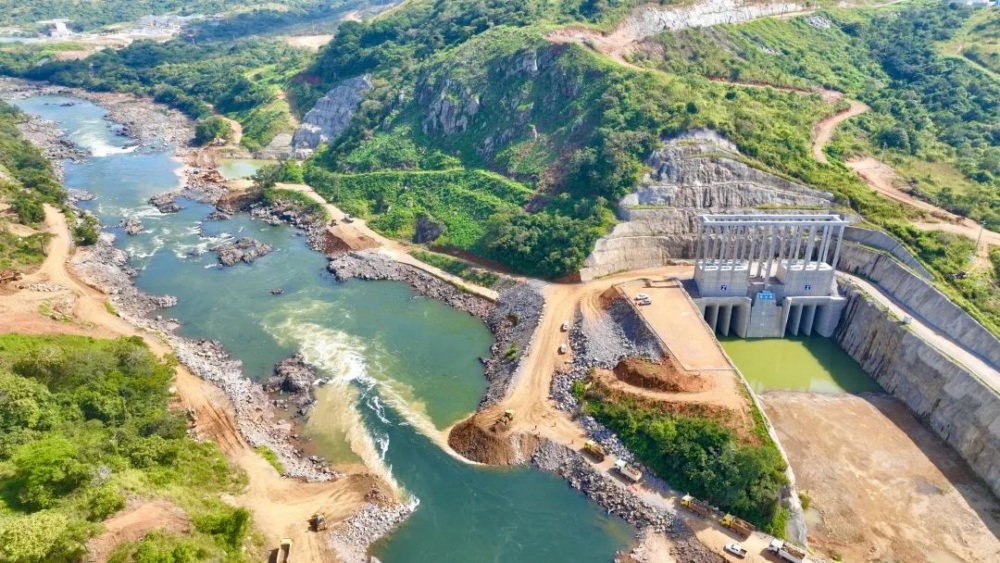
Angola has excess hydropower yet lacks a way to sell it. That’s why connecting its hydropower stations to the regional grid could unlock new revenue streams and expand power for the region’s industrial growth. That’s why the agreement signed by Namibia and Angola in April to build a 166 km transmission line connecting their power grids is such a big deal.
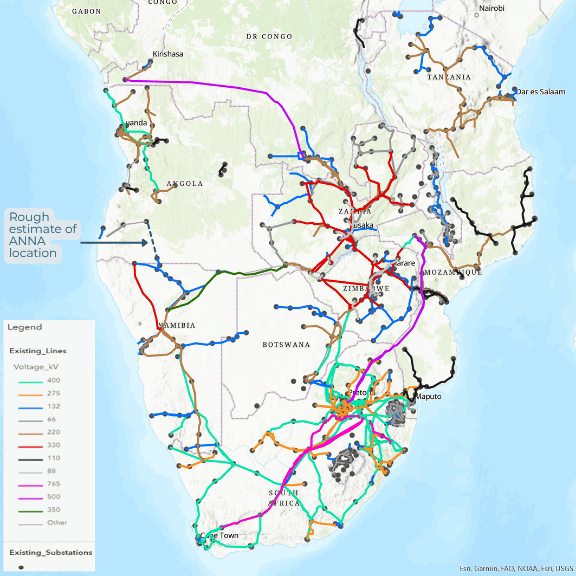
The project, known as ANNA, won’t be completed until 2029, but it represents Angola’s entry into active participation in the Southern African Power Pool, a regional electricity marketplace designed to balance supply and demand across more than a dozen countries.
The context: Southern Africa needs more power
Electricity demand across Southern Africa is projected to expand by 5% per year until 2030. At the same time, several countries are struggling with generation shortages. South Africa has faced years of rolling blackouts due to aging infrastructure and mismanagement at Eskom (but has seen a recent improvement). Zambia’s hydropower-dependent grid has been crippled by severe droughts, forcing extended load-shedding. Zimbabwe faces similar challenges. Angola is positioning itself to meet this dual challenge — rising demand and unreliable supply — by connecting its underutilized hydropower resources to the regional grid.
Angola’s hydropower could help — but it’s currently disconnected from regional demand
The country’s hydroelectric facilities can produce over 3,500 megawatts (MW) of power. Total hydropower potential is estimated at 18,000 MW, roughly equivalent to the entire installed capacity of Washington State, about 25% of the United States’ total hydropower capacity. That’s enough to power Angola’s domestic needs several times over and supply neighboring countries. But current electrification rates are estimated at 43% in most cities and less than 10% in rural areas, and the national grid is fragmented into three disconnected systems. As a result, both businesses and residents rely heavily on diesel generators for power. The mismatch between generation potential and delivery infrastructure means Angola is simultaneously energy-rich and energy-poor.
Angola has been a member of the regional power pool for years but has not participated in regional electricity trading due to a lack of cross-border connections. The ANNA interconnector will link Angola’s southern grid to Namibia and the broader Southern Africa Power Pool, finally enabling the country to access a regional electricity market spanning more than a dozen countries.
Three questions will determine if Angola becomes a regional power player
- Can Angola execute domestically before the window closes? Even if both countries follow through on the agreement, the ANNA interconnector won’t be ready until 2029. That gives Angola time to address its most pressing electricity challenge: tackling transmission bottlenecks and connecting its fragmented grid. The southern grid will connect to Namibia, which is still largely isolated from the northern and central systems. Without reliable domestic delivery, export commitments will struggle. The political dimension matters too: exporting power while most Angolans lack electricity access could spark backlash, especially if exports take priority over internal expansion. Delays in any of these areas could mean missing the market opportunity entirely as regional competitors move faster.
- Will there be enough creditworthy buyers? Even with physical connections, the regional pool’s effectiveness depends on purchasing capacity. While electricity shortages persist across Southern Africa, many importing countries face fiscal constraints that limit long-term power purchasing agreements. South Africa’s supply challenges are gradually easing, reducing its import needs. Zimbabwe routinely runs up power arrears. Angola needs buyers who can pay, not just countries that need power.
- Will the region soon face oversupply as multiple countries race to export? Angola isn’t alone in betting on hydropower exports. Mozambique is bringing a $6 billion hydroelectric plant online, positioning itself as potentially Southern Africa’s largest contributor. If multiple countries succeed in connecting large-scale generation to the regional grid simultaneously, the market could face oversupply, driving down prices and undermining the economic case for these investments.