

Countries across Africa are racing to jump on the nuclear bandwagon. They are eager for energy to run mines, industry, and data centers while the World Bank nuclear ban is now gone and major powers are aggressively competing for nuclear exports.
- Ghana, Kenya, Nigeria, Rwanda and Senegal have all joined the global pledge to triple nuclear capacity by 2050.
- Guinea, Niger, Mali, and Burkina Faso have signed civil nuclear agreements with external developers.
- Ghana, Kenya, Uganda, and Ethiopia have all announced ambitious near term nuclear targets.
Africa’s interest in nuclear power is real. Yet before we celebrate, we need to separate genuine progress from unrealistic announcements that undercut the credible case for nuclear tech. Governments and nuclear advocates do themselves no favor when they make outlandish claims or set wholly unrealistic goals.
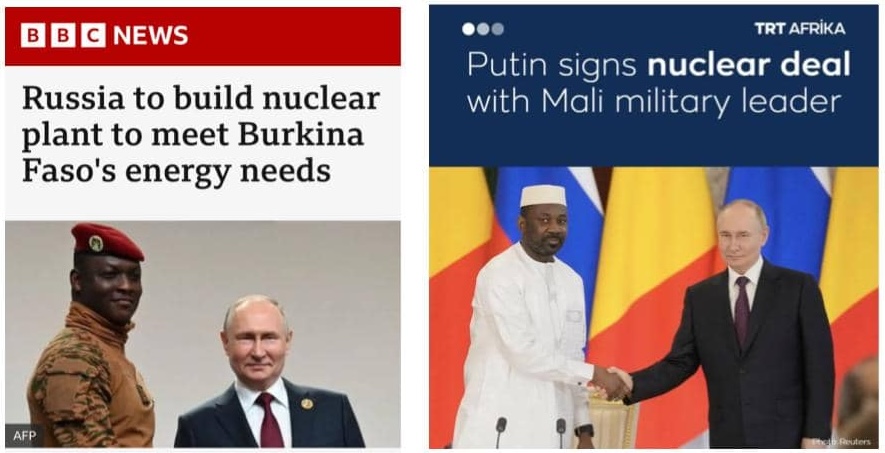
Here are the most common types of nuclear hoopla we’ve observed in the continent.
1. Too big!
A general rule of thumb is that no one power plant should be more than 10% of national capacity. That prevents overexposure of risk or trying to grow too quickly and potentially bankrupting the entire system — or country. Yet many countries announce huge new investments that dwarf the current grid. In an extreme example, Niger’s current installed capacity is about 500 MW yet its mining minister announced in September 2025 plans to build 2,000 MW of nuclear power with Russia’s Rosatom. This might (arguably) have some short term propaganda benefit, but it’s no way to plan for a nuclear future.
Even less extraordinary examples can be a problem. Kenya’s government announced a first nuclear development of 2,000 MW with plans to reach 6,000 MW, while the nation’s current installed capacity is only about 3,400 MW. Similarly, Uganda is targeting at least 1,000 MW of nuclear by 2031, which would nearly double current capacity.
2. Too soon!
Preparing to build, regulate, and manage nuclear power takes decades. Yet many countries still very far from meeting foundational readiness announce unrealistic near term plans. Burkina Faso has almost none of the preparatory agencies in place yet claims to be on the cusp of construction to build the country’s first plant with Russia. Guinea, Togo, and Burundi have also made public claims of imminent nuclear plans. Officials from normally-sober Rwanda have floated a goal of 1,000 MW by 2031, even though the country is still in exploratory stages and has not signed a construction agreement or initiated vendor selection. Even Ghana, which is farther along than most countries, has announced aggressive timelines, such as an operational plant by the early 2030s when late 2030s is more likely.
3. Too misguided as a solution to first access!
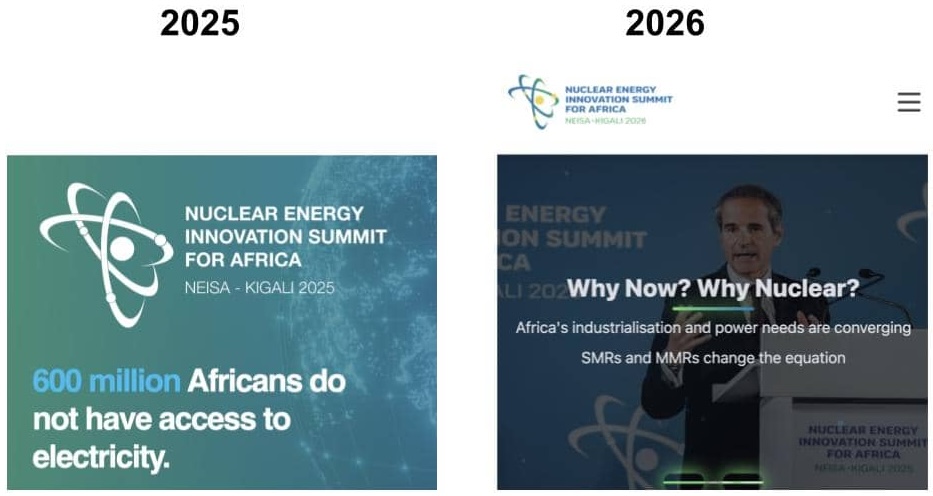
Nuclear power has many positive attributes, such as scale, reliability, small footprint, and low emissions. This makes it attractive for large industry and mature utilities that need large-scale long-term energy sources. Nuclear power is almost never going to be a short-term speedy power source for first-time access in poor countries. Yet sometimes analysts try to frame nuclear as a ready solution to Africa’s electricity access gap. For instance, officials at the 2025 Nuclear Energy Innovation Summit in Kigali repeatedly invoked 600 million people without access as a reason to support nuclear power. Lots of other examples make this mistake. (Fortunately, the 2026 summit highlights industrialization and energy security rather than basic access).
Effective nuclear advocacy must embrace reality and reject hoopla
Africa’s growing interest in nuclear energy reflects genuine ambition to diversify power systems and support long-term economic growth. South Africa has had nuclear power for decades, Egypt is constructing its first plant, and we estimate at least six other countries on the continent will be ready soon, perhaps within the next five years.
Questionable claims undermine viable energy planning and the case for nuclear power. Hoopla may make good press. But hoopla makes terrible policy.