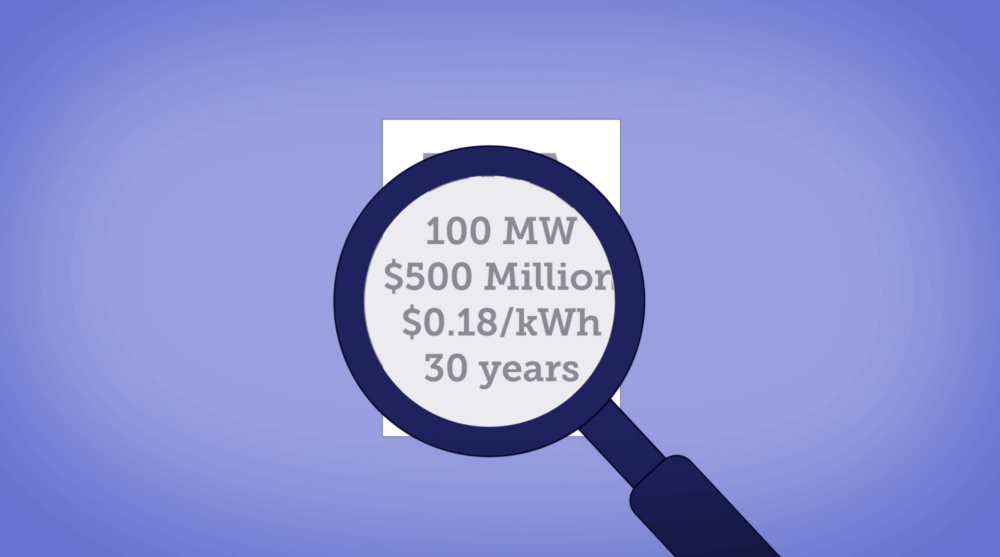
Caribbean countries face some of the world’s highest electricity prices, meaning decisions embedded in long-term power contracts can have consequences across the economy. In a small island system, a single power project can represent a significant share of total installed capacity, making individual contract provisions particularly consequential.
Caribbean countries are now entering a critical period for power sector investment, with governments seeking to add more renewable energy, storage, and other new generation. The Energy for Growth Hub has partnered with the Organization of Caribbean Utility Regulators (OOCUR) to help regulators navigate the long-term power purchase agreements (PPAs) that will underpin this transition.
Over the past two years, the Hub and OOCUR have jointly developed a practical PPA Review Checklist specifically for regulators in small island markets. The checklist is now available for OOCUR members through its website.
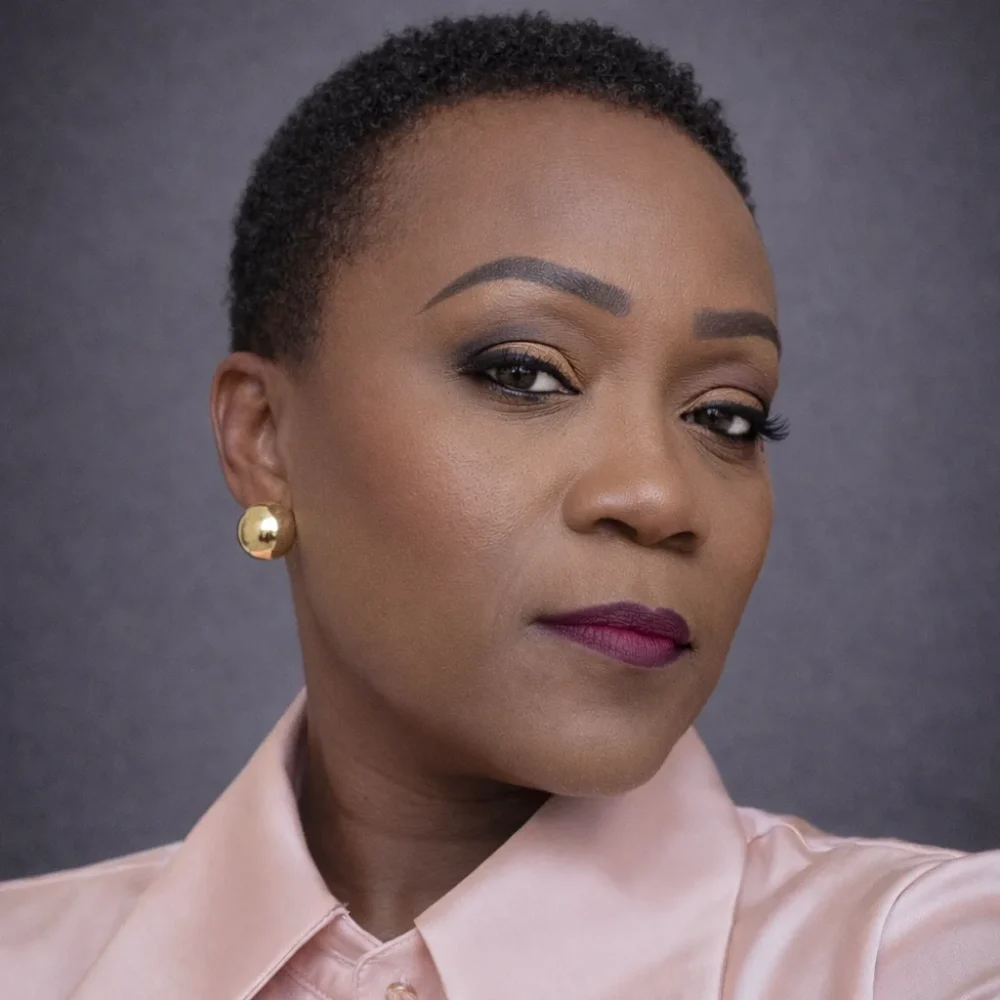
We spoke with Marsha Atherley-Ikechi, Executive Director of OOCUR, about the challenges Caribbean regulators face reviewing PPAs, how the new checklist can help, and why the region has an opportunity to establish stronger contracting practices before future deals are signed.
Caribbean Regulators Face Structural Constraints
OOCUR represents 17 regulators across the Caribbean, but the regulators’ authority over power contracts varies significantly. Some regulators must approve PPAs before they take effect, while others can only make recommendations to their governments. Some do not see contracts until the tariff-setting stage, after an agreement has already been signed, and others have no formal role in PPA oversight at all.
Regulators may lack the legal authority to obtain contracts and financial models and may only see agreements after the point when they could have influenced negotiations. At the same time, they must assess issues spanning finance, law, engineering, and other specialized fields.
A full PPA review, for example, can require interrogating a project financial model, evaluating sovereign contingent liabilities, assessing equipment warranties, and determining whether technical guarantees are realistic. No small regulatory agency could reasonably maintain every relevant specialization permanently on staff. Meanwhile, international developers may enter negotiations with substantial experience and resources. “There is really an asymmetry of experience and information,” said Atherley-Ikechi.
Regulators can therefore find themselves in a difficult position: being asked to certify agreements they have not had a proper chance to review, while risking being portrayed as obstructing investment when they raise concerns.
According to Atherley-Ikechi, one practical fix is to give regulators explicit authority to retain outside expertise when needed. Regulatory frameworks can allow hiring of external technical, financial, and legal advisers, with the cost covered by the applicant. This makes the cost of review predictable for developers while preventing a regulator’s own limited budget from determining how thoroughly a major long-term contract can be assessed.
Transparency Is a Benchmarking Problem
The lack of accessible contract information compounds these structural constraints.
Headline electricity tariffs may be visible across the region, but the provisions that produce those tariffs often are not. Capacity payments, indexation formulas, risk allocation, and other contractual terms can substantially change the actual cost borne by consumers.
That means when a regulator is told a particular clause or allocation of risk is “market standard,” it may have little ability to test the claim against comparable agreements elsewhere.
Greater access to executed PPAs and their underlying terms can help regulators distinguish genuinely common practices from terms that simply benefit one side of the negotiation.
OOCUR has already asked its members to share executed contracts as part of an effort to build a regional body of practice containing model PPAs, standard clauses, and contract terms. The aim is to give regulators a continually updated resource they can draw on when assessing future projects.
The Checklist Is Specific to Small Island Realities
The Hub-OOCUR collaboration grew out of a shared recognition of these challenges. From the beginning, the goal was to create a practical, context-specific resource that regulators could actually use.
“We wanted something that a regulator could put on the desk, beside an actual contract, any day of the week and work through it, item by item, and come up with a defensible written decision,” Atherley-Ikechi said.
The approach also deliberately reverses how much international PPA guidance has traditionally been developed. Rather than designing guidance for large continental power markets and then adapting it for small islands, the checklist begins with the characteristics of Caribbean systems.
“We also refused to treat the Caribbean as a footnote,” she said. “The small island developing states’ considerations led the document.”
Regulators Should Have More Say in the Contracting Process
The checklist reflects several principles for strengthening regulatory oversight of PPAs. First, regulators need to establish their legal authority before analyzing a contract. As Atherley-Ikechi put it, “authority before analysis” lays the foundation for everything else.
Second, regulatory leverage is strongest before a PPA is signed, particularly when governments are designing competitive tenders. By the time a PPA reaches the tariff-setting stage, a regulator may face the choice of passing through costs it never evaluated or penalizing a utility for contractual terms it no longer has the ability to change. When governments use competitive tenders, key questions around risk allocation should therefore be addressed before bid documents go to market.
Third, regulators should look beyond headline tariffs to understand how risks are allocated.
Fourth, transparency needs to be built into the agreement itself. As Atherley-Ikechi put it, “Transparency has to be a contract term. It is not a value you hold; it is a clause you draft. To do otherwise is to open the door to speculation and dispute.”
Lastly, regulators may not always be able to reopen a contract from which they were excluded. But that does not necessarily mean they have no remaining leverage.
“You may not be able to change a contract you are excluded from,” she said. “However, where appropriate, as an independent regulator, you can decline to pass through a cost you are given no opportunity to evaluate.”
The checklist is also intended to help regulators and developers establish clearer expectations for future projects. “You put those decisions on the record, and your reasoning stops being an internal view and becomes market intelligence,” Atherley-Ikechi said. The checklist can also inform tender specifications and procurement processes and serve as a training tool for new regulatory staff.
The Caribbean Has an Opportunity to Design Contracts Around Its Own Risks
Atherley-Ikechi is optimistic about the region’s position. Much of the Caribbean’s transition to renewable energy is still ahead, meaning governments have an opportunity to improve procurement, transparency, and risk allocation before signing the long-term contracts that will shape their power systems for decades.
“We are early, and we will not be early twice,” she said.
The shift from bilateral negotiations toward competitive tenders is already creating opportunities to improve outcomes. More importantly, regulators are increasingly asking difficult questions, “before they sign, rather than after.”
The region can also use this moment to develop contractual approaches tailored to challenges that Caribbean power systems experience particularly acutely. Atherley-Ikechi pointed to issues such as reserving rights to add storage later in a project’s life, determining whether a currency peg truly removes foreign exchange risk or simply converts it into a different tail risk, and making climate-risk provisions more symmetrical so that the public does not automatically bear the cost of restoring privately owned assets after major storms.
She believes the Caribbean can also develop approaches that prove useful beyond the region, particularly for other small island power systems facing similar challenges.
“We are far too accustomed to being described as recipients of technical assistance,” she said. “The difference is that on this project, on this subject, we are producing the architecture.”
The Hub and OOCUR’s PPA Review Checklist aims to help Caribbean regulators scrutinize long-term power contracts, establish stronger market expectations, and better protect the consumers who will ultimately pay for them.