Bottom Line Impact
Energy for Growth Hub founder Todd Moss and Hub board member Ben Leo first proposed creating a consolidated US development finance agency in April 2011. In October 2018 — based on this proposal and with diligent support from Congressional staffers, the National Security Council, the ONE Campaign, and colleagues at the Center for Global Development — the US Congress passed the BUILD Act to establish the US Development Finance Corporation, replacing the Nixon-era Overseas Private Investment Corporation. The Act consolidated US development finance tools into a single agency to catalyze economic opportunity, create commercial opportunities for American businesses, and boost US diplomacy.
Why It Matters
The launch of the US Development Finance Corporation was the biggest single step forward in US development policy since the creation of the Millennium Challenge Corporation in 2004 and the launch of PEPFAR in 2003. The BUILD Act streamlined and strengthened US development finance tools. It reflected growing global demand for partnership with the United States on infrastructure investment, rather than traditional aid. And it expanded opportunities for American businesses to compete in emerging markets across Africa, Asia, and the Middle East.
It was also the Energy for Growth Hub’s first big policy win. Our role in crafting the policy proposal and building support for a new government agency established the Energy for Growth Hub — in its very earliest days — as a credible and influential organization focused on strengthening US development policy and impact.
What We Did
- Proposed a new, consolidated development finance agency. Todd Moss put forward the idea in a Center for Global Development brief in April 2011 and a full proposal in 2015.
- Built a coalition. We engaged administration officials, congressional staffers, and development advocates over the course of seven years.
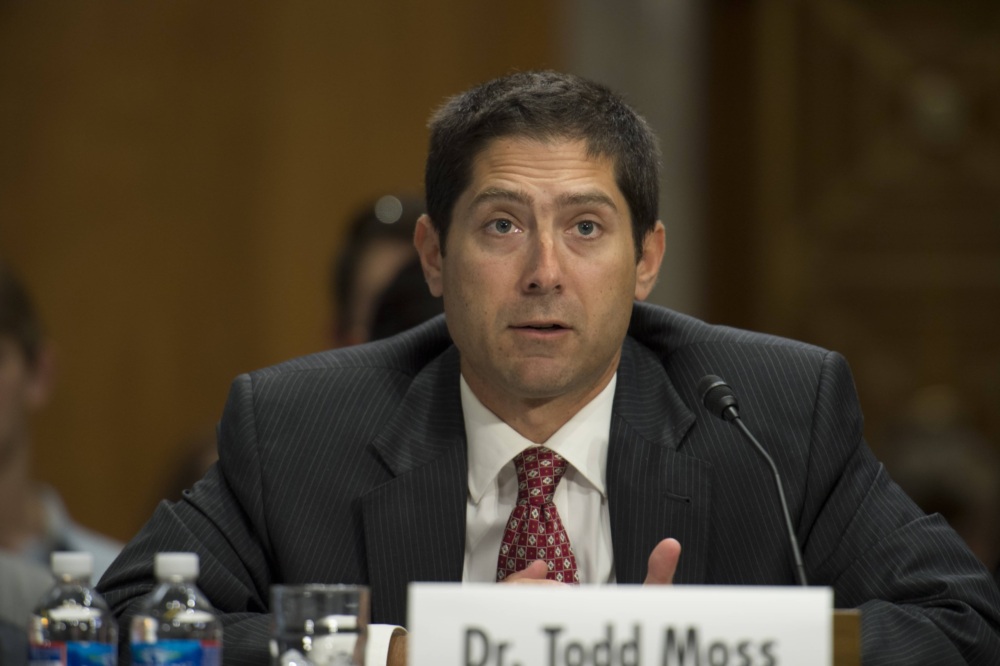
- Testified to Congress. Todd testified (in 2013, 2014, 2016, and 2017) and commented on progress along the way (see here, here, here, and here).
- Pressed to make project-level data public and machine-readable. Todd and Ben built a unique scraped database to show how it could work.
- Shaped the advocacy push. Todd helped drive the ideas, practical tools, and bipartisan support for the BUILD Act.
Big Win: New $60 billion (now $205 billion) US development finance agency helps countries create jobs and expand energy.
The BUILD Act established the DFC as the principal US tool for investing in energy infrastructure and supporting the energy transition in poor countries. The new agency is:
- Bigger. At launch, its $60 billion lending cap was more than double that of its predecessor agency. In 2025, DFC was reauthorized at $205 billion.
- More transparent. The bill required detailed project-level data to be made publicly available in a machine-readable format (something we pressed for and demonstrated how it could work).
- More competitive. New authorities to provide equity and grants enable the agency to move faster and more flexibly.
Key Partners
- Crucial congressional staffers, especially Andy Olson, Tom Mancinelli, Jimmy Walsh, and Andy Taylor.
- National Security Council staff, notably Jim Mazzarella, Nadia Schadlow, and Clete Willems.
- Former OPIC CEOs Rob Mosbacher and Elizabeth Littlefield.
- Tom Hart and colleagues at the ONE Campaign.
- Erin Collinson, who led the Center for Global Development’s policy outreach with Congress and development advocates.
- Smita Singh of the Center for Global Development board.
- Dan Runde at the Center for Strategic and International Studies.
- George Ingram at Brookings.
- Porter Delaney at Kyle House Group.
Learn more about our work on the DFC.
Related Insights
- Boom! A New US Development Finance Corporation!
- Devex: A New US Development Finance Agency Takes Flight
- Devex: How policy wonks, politicos, and a conservative Republican remade US aid
- Todd Moss launches the Energy for Growth Hub to connect the world to a high energy future
- How Might Think Tanks Make Real Things Happen? Lessons from the Creation of the DFC
- US Development Finance Corporation Lifts Ban on Nuclear Projects, Expands Low Carbon Energy Options