Impact: Through seven years of sustained advocacy, the Energy for Growth Hub helped end decades-long nuclear bans at the World Bank and Asian Development Bank, unlocking critical technical and financial support for emerging markets pursuing nuclear energy. By making the data-driven case that nuclear is viable for developing countries, building bipartisan support across two US administrations, and working directly with bank leadership, we pursued policy changes that seemed impossible — until they weren’t. The new policies will create competitive alternatives to Russian and Chinese nuclear partnerships while expanding reliable energy options for industrial growth across Asia and Africa.
Why the Policy Change Was Needed
Fast-growing emerging markets need energy for industrial growth and jobs. Next generation nuclear technologies could help meet that demand, but many countries — especially those seeking their first reactor — need technical and financial support. Despite this need, multilateral development banks had historic bans on investing in nuclear power. The World Bank is the largest public advisor and financier of energy infrastructure in developing economies, yet its policy strictly prohibited even building internal expertise. And this policy was replicated across all the other multilateral banks. As a result, countries had little choice other than to turn to Russia and China for nuclear support, putting the transparency, safety, and competitiveness of energy markets at risk.
What We Did
- Engaged the World Bank early — and quietly. Todd Moss first approached Bank shareholders about nuclear energy in 2019, long before it was popular.
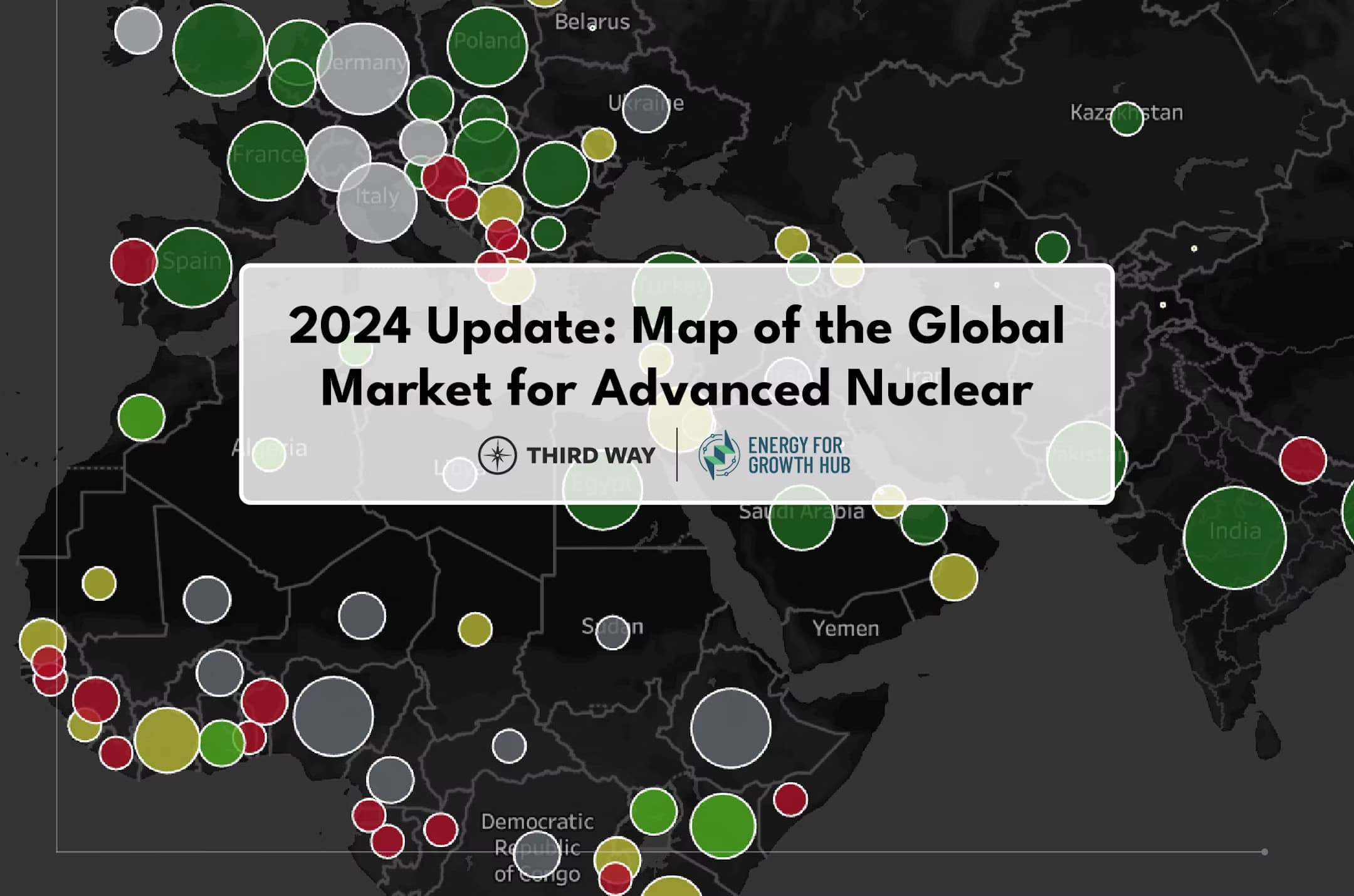
- Used data to make the case that nuclear power is not only for rich countries. The Hub partnered with Third Way to score every country on its nuclear readiness and then mapped the potential global market for advanced nuclear, finding many countries ready (or near-ready) across South Asia, Southeast Asia, and Africa.
- Advocated explicitly for World Bank support. Once the door started to crack open, we advocated openly for the World Bank to get involved in nuclear power and showed how a change could cascade to the 21 other public agencies that copy the World Bank’s investment ban.
- Pitched the US Treasury, White House, and key Congressional offices. The Hub, in partnership with allies including ClearPath and Third Way, engaged directly with policymakers during both the Biden and Trump II administrations, linking nuclear exports to core national security goals.
- Helped ClearPath work with Hill staff on legislation. With our support, ClearPath helped to introduce the International Nuclear Energy Financing Act and later to insert draft language in appropriations text directing Treasury to instruct the Executive Directors at multilateral development banks to “use the voice, vote and influence of the United States to support an ‘all of the above’ energy policy… including civil nuclear power.”
- Cultivated concrete support within the Trump administration. The Hub built a constituency inside the White House, primarily thanks to DJ Nordquist, a member of the Council of Economic Advisors and former US representative to the World Bank under Trump I. She wrote ‘The World Needs More Nuclear Power: Why the World Bank Needs to Get in the Game” with Jeff Merrifield in Foreign Affairs in January 2023. And in April 2024, Treasury Secretary Scott Bessent elevated the issue by publicly urging the Bank to lift its ban.
- Worked quietly with World Bank President Ajay Banga’s team. As his office came under increased pressure to reform the bank’s energy policy, we worked with them to find politically-viable pathways forward.
- Engaged behind the scenes with the Asian Development Bank. In parallel, we worked closely with senior officials at the ADB, making the case that its ambitious plans for early coal retirement could be helped by embracing nuclear technology.
Big Win: Both the World Bank and Asian Development Bank end outdated nuclear bans
In June 2025, the World Bank announced it would lift its longstanding ban on nuclear energy projects. Specifically, it will begin supporting efforts to extend the life of existing reactors, carry out related grid upgrades, and accelerate the potential of Small Modular Reactors that could one day be viable in the Bank’s client countries.
- World Bank President Ajay Banga said that, “for the first time in decades, the World Bank Group will begin to reenter the nuclear energy space… building capacity and strengthening our ability to advise on non-proliferation safeguards, security, and regulatory frameworks.”
- Hub Fellow and advisor to Ghana’s Energy Ministry Ishmael Ackah explained why his country has been waiting for this change: “Things have been slow for us because of global politics around nuclear, but we have been preparing, setting up an institutional structure, identifying sites… We want a 24-hour economy, industrial production to be happening day and night.”
In November 2025, the Asian Development Bank revised its energy policy to allow support for nuclear power.
- ADB President Masato Kanda explained, “These changes further enhance ADB’s ability to support countries in Asia and the Pacific as they work to meet their rapidly growing energy needs. Nuclear power… is an important technology option for countries looking for reliable alternatives to baseload electricity.”
Ultimate Impact → Lifting nuclear bans at the major development agencies will help countries decide whether nuclear will be a part of their energy mix, which models are best, how to procure them competitively, and how to manage them in service of national economic goals. These policy changes are also prompting other financiers to revisit their own policies, potentially unlocking billions in new investment for clean energy infrastructure. Ultimately, this wave of reform creates the opportunity to build a global nuclear market that is open, competitive, and safe.
Key Players
- Todd Moss, who successfully advocated for the US Development Finance Corporation to drop its own nuclear ban in 2020.
- DJ Nordquist, who used her political savvy and insider knowledge of the World Bank to cultivate support.
- Jessica Lovering, co-founder of the Good Energy Collective and Hub fellow, who did deep analysis on policy for advanced nuclear and the opportunities for developing economies.
- ClearPath, which built bipartisan congressional support around this issue.
- Third Way, which hosted the mapping of global advanced nuclear demand and advocated on the Hill.
- Hamna Tariq and Daniel Johansson, the Hub staff who crunched the numbers and did foundational research and analysis.
Related Insights
- Todd’s substack posts on How to Get Sh*t Done in Washington DC (Aug 2025), Five practical steps for the World Bank to get comfortable with nuclear (Sept 2024), and US House ramps up pressure on World Bank nuclear ban (March 2025)
- The Hub and Third Way’s 2024 Global Markets for Advanced Nuclear map
- Analysis of Which Development Finance Agencies Are Open to Nuclear? (And Which Copy the World Bank Ban?)
- Video on Why It’s Time to End the World Bank Nuclear Ban
- All our work on advanced nuclear