


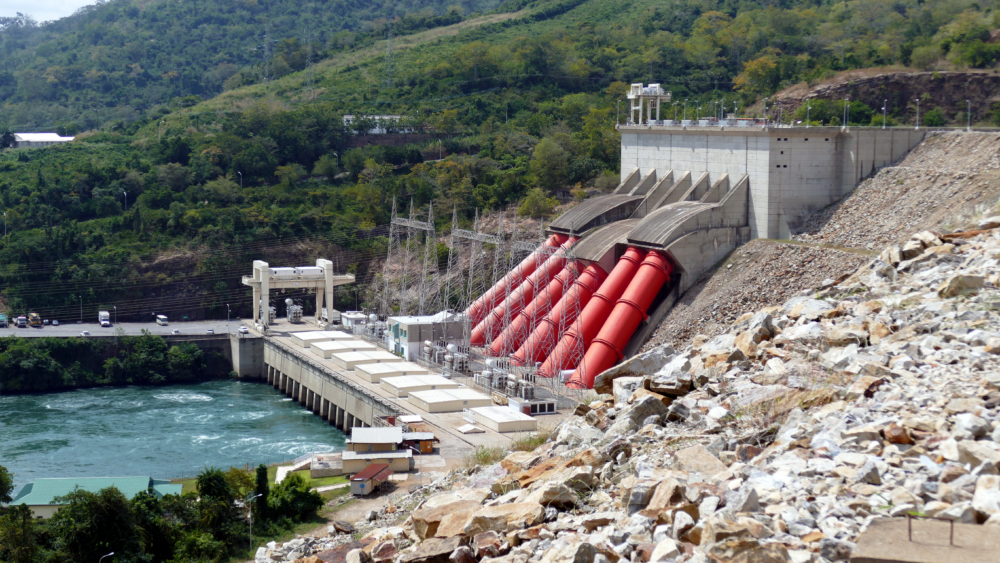
In late April 2026, the Akosombo Dam in Ghana shut down after a fire at a substation caused massive power outages across the country. During such power shortages, governments typically attempt to find quick fixes, such as emergency contracts, to address systemic grid challenges. Though Ghana did not respond by launching new power procurement, this incident serves as a reminder of the pressure power crises create that pushes policymakers to sign predatory contracts.
Emergency Procurement Often Creates Long-Term Fiscal Liabilities Because Urgency Displaces Oversight
Contracts signed to end a shortage often outlive the shortage itself. Across emerging markets, emergency procurement repeatedly and disproportionately favors developers and results in long-term PPAs that lock utilities into rigid payments, excess capacity, and weak exit options. These PPAs not only raise tariffs, but also crowd out cheaper generation, delay competitive procurement, weaken regulatory authority, and create fiscal liabilities that only become visible once arrears build up.
The problem is not emergency procurement itself because governments may need fast power supply, but that urgency sometimes becomes an excuse to suspend established rules and necessary oversight. In a crisis, timelines are compressed, and developers press for terms that would not survive normal scrutiny. Executives, under pressure to end shortages, accept them. Regulators, whose job is to protect affordability and market stability, are often bypassed or informed too late.
A contract signed in a crisis can easily become the de facto energy policy of a country. It decides what power is dispatched, which technologies enter the system, how much consumers pay, and how much reform-space governments have left. Bringing regulators into the process early, requiring disclosure of key terms, and committing to public transparency on a clear timeline would help hardwire oversight into emergency responses.
Emergency Procurement Becomes Costly When Urgency Weakens Scrutiny, Temporary Powers Become Permanent, and Governments Over-Procure Capacity
1. Acute supply crises lead to rushed, costly decision-making
Emergency power procurement usually follows a system shock such as droughts that reduce hydropower output, failure of fuel supplies, or demand outpacing capacity. In those moments, where speed becomes the dominant policy value, long-duration contracts, rigid take-or-pay clauses (i.e. the government pays developers regardless of power production), and weak exit provisions become easier to justify for policymakers.
For example:
- Ghana: During the 2011-2016 dumsor power crisis the government signed 32 PPAs under intense pressure to restore supply. Many exceeded actual demand and, by 2019, the Ministry of Finance had paid $620 million for unused power. At its peak in 2025, total sector debt reached $3 billion. Emergency procurement to address the supply issue was especially expensive. For example, the tariff for Karpowership, a power generation company that operates floating power plants, typically contracted during power crises, was US¢12.8/kWh, whereas the tariff for a state-built solar plant a few years later was around US¢10/kWh.
- South Africa: In response to its 2021 loadshedding crisis, the government signed a 20-year take-or-pay PPA deal with Karpowership as an emergency solution. The proposed ‘emergency’ solution however was neither temporary nor strategic. It relied on a long-term contract, ignored environmental authorization procedures, and attempted to lock the country into decades-long fossil fuel dependency. A High Court officially canceled the deal in July 2025, but only after years of legal uncertainty and policy damage.
- Sri Lanka: The country repeatedly relied on opaque, non-competitive processes to procure high-cost emergency power from barge-mounted plants during droughts. These contracts extended beyond the crisis period, placing significant financial strain on the national utility. Sri Lanka’s recent move to limit emergency power purchases to one year, unless extended by Cabinet, is a step in the right direction as emergency authority must be narrow, visible, and temporary.
2. Emergency procurement becomes extremely damaging when crisis decisions become permanent
In Bangladesh, non-competitive procurement became institutionalized through the “Quick Enhancement of Electricity and Energy Supply (Special Provision) Act 2010,” resulting in expensive rental power plants which steadily increased the national cost of electricity. The Act was originally enacted as a two-year measure in 2010, but was repeatedly extended in 2012, 2015, 2018, and 2021 until it was repealed in November 2024 costing the country about TK 1 trillion (~$8 billion) in capacity charges. For 14 years, a temporary emergency framework created a path around ordinary public procurement rules. Without a set expiration timeline, temporary exceptions become permanent institutions.
3. Fear of shortages encourages over-procurement
Under pressure to avoid future shortages, governments buy more capacity than demand forecasts justify, often under rigid take-or-pay arrangements. The contracts ensure revenue certainty is guaranteed for developers, while utilities and consumers take on the risks.
Ghana’s Karpowership contract was initially framed as a stopgap during the dumsor crisis, but later extensions made it a lasting feature of the power system. What began as temporary supply now accounts for about 12% of national demand and leaves the government with hundreds of millions of dollars in payment obligations.
Demand forecasting and least-cost planning cannot be treated as luxuries during emergencies because they are the safeguards that prevent a short-term shortage from becoming long-term excess capacity.
Policymakers Can Prevent Temporary Solutions from Becoming Permanent Liabilities
- Regulators should be involved in the process from the get go. Regulators should review the template agreements that form part of the bid documents for competitive bidding processes. Where a non-competitive process is used, the regulator should be notified at the outset and given enough time to review draft terms, set minimum standards, and object to provisions that threaten consumers or market stability.
- Speed does not require single-sourcing. Governments can prepare for emergencies by setting up pre-qualified supplier pools, accelerated competitive bidding processes, standard emergency templates, and short bid windows. These tools preserve competition while ensuring a swift response.
- Emergency contracts and procurement programs must be time-bound. One-year limits with clear termination provisions should be the default while longer term contracts should trigger full competitive procurement. Equally important, the underlying emergency procurement framework itself, whether a statute, executive order, or regulatory exemption, should carry a statutory sunset that forces reversion to ordinary public procurement rules.
- Adopt graduated transparency, ending in public disclosure. Public disclosure of contracts, tariffs, and risk allocation raises the cost of locking in bad deals before they become irreversible. Where full public disclosure cannot happen immediately, full disclosure to the regulator should be the first step toward public release. Regulator-only disclosure is a useful interim measure but not the endpoint, and the timing of eventual public disclosure should be defined at the outset of the emergency response rather than left to later discretion.
- Emergency power must be paired with a clear transition plan. Temporary supply should be explicitly linked to demand forecasting, grid investment, and least-cost planning to prevent over-procurement.
Conclusion
Rising fuel prices and geopolitical shocks are increasing system stress and pushing more countries toward emergency responses. For instance, Mauritius recently approved a $400 million loan to support emergency Karpowership operations despite long-standing concerns that such arrangements crowd out sustained investment in power systems.
Countries cannot prevent every emergency, but they can decide whether emergencies suspend the rules. Strong systems bring regulators in early, preserve competition where possible, treat long-term PPAs as fiscal commitments, and disclose contracts on a clear timeline. Weak systems let crises become cover for contracts that consumers and governments spend years trying to unwind.