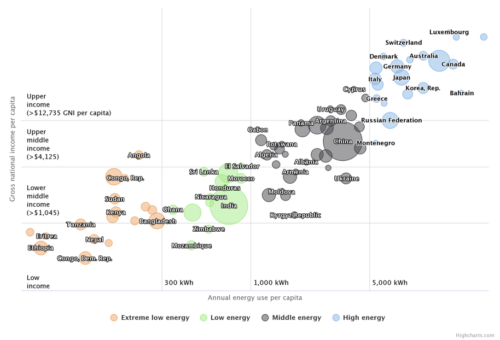
Meeting the energy needs of emerging economies requires additional metrics more closely aligned with job creation and economic growth.
5% The share of global energy consumption used in residential electricity.
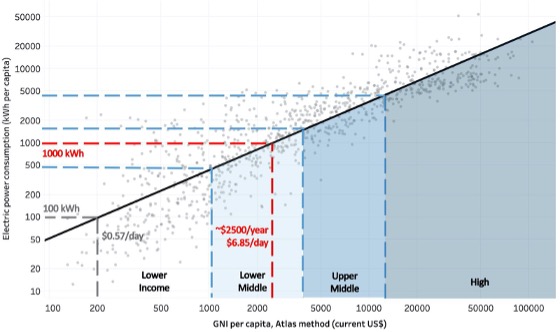
50 kWh The amount of electricity a rural person must use in a year to be considered to have ‘modern energy access’.
33 hours The amount of time it takes an average American to use 50 kWh.
The Issue
Basic household electricity access is the dominant metric for tracking progress against global energy poverty — but actually means very little in terms of what drives opportunity and economic prosperity.
Relevance
Household access to basic electricity is an important first step. But it’s not the same as the energy needed for job creation and inclusive economic growth. We need new indicators (and better data) that raise ambitions, prioritize policies and investment, and track progress toward building the high-energy systems all modern economies require.
Our Approach
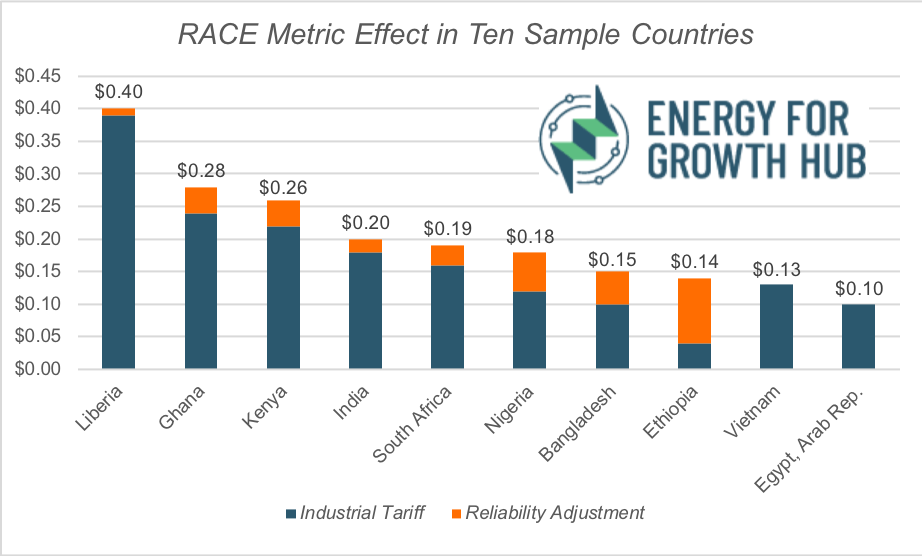
We aim to broaden energy progress indicators from initial household access to also cover cost, reliability, and energy for industry, commerce, and other productive uses. We push for solutions at scale that align with countries’ own development ambitions. The Hub has developed two new metrics to do this: The Modern Energy Minimum as a new consumption target and the Reliability-Adjusted Cost of Electricity (RACE) to reflect what firms care about most.
To defeat energy poverty, we need energy metrics aligned with economic growth.
More than a billion people worldwide live without access to basic electricity: One in every six people on Earth doesn’t have enough energy at home for indoor lighting or even to charge a mobile phone. But as appalling as that figure is, it has misled policy-makers, nonprofits, and funders about the true extent of global energy poverty.
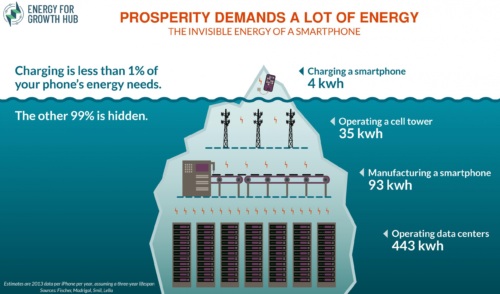
Infographic – Are We Learning the Right Energy Lesson from Mobile Phones? The Energy Iceberg Says No
The mobile phone revolution is allowing countries to skip landlines, prompting many observers to assume countries might also skip building an electricity grid and jump right to distributed home energy systems (e.g., here and here). New disruptive technologies are exciting and alluring, especially in sub-Saharan markets where the unmet infrastructure needs are huge. After all, if you can charge your smartphone with a rooftop solar kit, then who needs power plants and a grid?
Scientific American: To End Poverty, Increase Access to Energy
Board Member Tisha Schuller and Advisor Seth Levey write in Scientific American: We have come to understand that energy is among the most important anti-poverty tools….